Showing posts with label Workshop. Show all posts

Thursday, May 10, 2018

Shore Leave 40 Is Coming Soon!


Just a reminder: It’s okay to leave comments!

Yes, the annual Shore Leave Sci-fi convention is only a couple of months away. It sneaks up on me every year. I go to meet WRITERS and CELEBRITIES, and try to keep up with what's going on in the sci-fi world. This has been a difficult year at best, and I'm not sure how much of the convention I'll be able to attend, but I hope to spend some time there.

If you want to get an idea of what the convention is about, here's a short video! (This may not show well on mobile devices.)


Video courtesy of BCPL Online (Baltimore County Public Library)

BTW, I'll be giving away a few books from authors I know and maybe have a couple of works in the art show. The don't have a direct link for the art show yet (they aren't the best at getting information out...), but it should be coming soon. Until then, click HERE.


© 2018 K. R. Smith All rights reserved

Sunday, August 20, 2017

Shore Leave 39 - The Saturday Panels


Just a reminder: It's okay to leave comments!


Woohoo! All the free books I put out evaporated. And I have a request for another copy of Human 76. I hope everyone enjoys them! 

The free books I put out at Shore Leave 39
The free books I put out at Shore Leave 39 - gone in a flash!


Group meeting image designed by Freepik
Designed by Freepik


I've been a bit busy lately, so I'm behind in posting info on the panels I attended at Shore Leave. This is all very appropriate with the panel "Your Writing or Your Life" being discussed here. So, finally, here are the panels I attended on Saturday and a few notes on each!

Saturday Panels
Scheduled times:

11:00 am Your Writing or Your Life
 1:00 pm Defending the Lighter Side
 2:00 pm The Art of Secondary Characters


Your Writing or Your Life
Writers often experience conflicts between their writing and their family and job obligations. Can one use such conflicts productively? How does one build a firewall between work and the rest of life?
Stephen Kozeniewski (M), Heather E. Hutsell, Lorraine Anderson, Laura Ware, Kathleen David

This one was more of a confirmation that other writers have the same problems I have trying to find the time to write. It was worthwhile to attend if only for that reason. They all said that people making a full-time living writing are rare; they are called unicorns. The panelists did have a few suggestions, but admitted they won't work for everyone:
  1. Having a word goal for the day is sometimes useful
  2. See your writing as something of value 
  3. Outlining works for some writers
One of the biggest factors is having family support for your writing. They should see it as a job, and that you are working. It isn't just a hobby.

When your work is interrupted it can be hard to pick up later on. Try retyping the last few sentences to get restarted.

One of the panelists said, "Remember that any amount of time can be used for writing. It takes about 15 minutes to write a page. Do it every day and in one year, you'll have a novel."

There were lots of personal stories about the difficulties each one faced when working on a story or editing. The main point is that every writer has to work around the situations that come up in life, and you have to keep writing, even if it is only a little at a time.


Defending the Light Side
In fiction, as in real life, upbeat and happy are often equated with silly fluff lacking substantial themes and intelligence. Or dismissed as childish. Those claims are often inaccurate, however.
Rigel Ailur (M), Christopher L. Bennett, Michael Critzer, Roberta Rogow, Andrew Hiller

The point of is panel is to say, "There is a place for fluff."

Whether it is a cozy mystery, a sweet romance, or just plain, silly humor, it shouldn't be dismissed, especially if it brings pleasure to the reader. There must be a balance to the amount of humor, however. If it is overdone, only the bad effects come through and the humor is lost.

Some publishers specialize in lighter writing, such as cozy mysteries. (Note: mystery writing seemed to be the focus of some of the panelists, and the genre was brought up often.) Characters like Jessica Fletcher and Miss Marple may not be realistic, but few can argue that they have not been successful—and have brought much enjoyment to their viewers and readers.

Readers often need a break from drama in either their reading or in real life. Lighter stories can bring that relief. Certain types of these stories, such as a sweet romance, can have a wider appeal and be more appropriate for a greater age range, for instance, than a steamy "adult" romance.

There was a long discussion about dark humor. One must be careful with this. There are times and places where this is appropriate, but the writer (or speaker) must know their audience. Not everything is funny for everyone, but that doesn't mean it is bad or wrong.


The Art of Secondary Characters
Supporting characters can fade into the background or steal a story. Our authors discuss how to know which is appropriate, and the craft to making such players come alive when the story needs them.
David Mack (M), Heather E. Hutsell, Richard C. White, Dave Galanter

This panel brought up the question, "How do authors decide if their secondary characters fade into the background or steal the show?"

Here are some thoughts on secondary characters:

First of all, don't hold back when creating your secondary characters. If they are strong enough, they can be put into another story or a book of their own.

There is a difference between secondary and supporting characters:
Supporting character
  1. these are more important characters in the story
  2. may appear throughout
  3. often a sidekick
  4. may be used as a POV character
  5. has agency in moving the story along
Secondary characters
  1. may only appear briefly, but more than a cameo
  2. are often used for backstory
  3. almost never used as a POV character (not in the story long enough)
  4. does not have agency in moving the story along
In a shared world, others may use your secondary characters in different ways.

Again, don't hold back with your secondary characters—they can make a good story a great story!

Up next - the Sunday panels!


© 2017 K. R. Smith All rights reserved

Monday, July 10, 2017

Shore Leave 39 - Saturday


Just a reminder: It's okay to leave comments!


Saturday July 8, 2016

Update: All the free books I put out evaporated. And I have a request for another copy of Human 76. I hope everyone enjoys them! 

The free books I put out at Shore Leave 39
The free books I put out at Shore Leave 39 - gone in a flash!


First of all, I know I'm not getting these out on the same day as the events took place, but I really do need to get at least 5 hours of sleep. When you're at Shore Leave, the day starts at 7:00 am and often goes until midnight. And when it's over, you're still a little tired. Okay, a lot tired. But I'll try to post as much as I can (and hopefully better than last year) as soon as I can!

Now, back to the post...

Things really got going on Saturday. Lots of discussion panels, lots of talks by actors, and lots of authors pushing their books.

Saturday Panels
Grimm Retrospective
Let’s talk about the final season, what we wanted to see and didn’t, and what the future is for the Grimm universe.
Ann Harding (M), Annie White, John White

Serger Sewing Tutorial
A serger is an amazing, fancy machine which sews and finishes fabric edges in one easy, quick step. Find out the unique capabilities
of this useful device.
D. Jeannette Holloman (M), Ron Robinson, Ozma Ireton

Marvel Women Warriors: Ultimate Face-off!
Sixteen of the most acclaimed female hand-to-hand combatants in Marvel are squaring off for you to debate and choose who is the
greatest Marvel woman warrior!
Andrew Kelley (M), Beverly Stark, Charles Davidson

Wow, I Wrote That?
Writers often discover stories they penned years earlier but don’t remember writing. It’s as close as one comes to reading one’s own
work the way others do. What have our panelists learned from this experience?
Howard Weinstein (M), Heather E. Hutsell, Lorraine Anderson, Aaron Rosenberg, Peter David

Revision or Do-Over?
Sometimes when we revise our work, we toss out the good with the bad and replace it with more first-draft content. How does one make
revision into refinement rather than replacement?
Andrew Hiller (M), Greg Cox, Laura Ware, Kelli Fitzpatrick, TJ Perkins

Indy’s Back (in 2020)!
Is the return of Indiana Jones, to be played one more time by aging but sturdy Harrison Ford, a good idea — or a bad one?
Howard Weinstein (M), Russ Colchamiro, Kathleen David, Dave Galanter

40 Years of Star Wars Costumes
Star Wars changed everything, including how we look at sci-fi costumes. How has this influenced other sci-fi? How has this changed costume fandom? What does the future hold?
D. Jeannette Holloman (M), Sharon Landrum

Outlander: From Book Shelves to STARZ!
Loving this series and speculating about what might come next!
Annie Brugmans (M), Maggie Restivo, Betsy Childs

Your Writing or Your Life
Writers often experience conflicts between their writing and their family and job obligations. Can one use such conflicts productively?
How does one build a firewall between work and the rest of life?
Stephen Kozeniewski (M), Heather E. Hutsell, Lorraine Anderson, Laura Ware, Kathleen David

History for Fun and Profit
Lots of SF/F stories explicitly use historical models, whether it’s the Victorian Age for steampunk or Age of Sail for original Star Trek.
What pieces of the past are best for borrowing? How important is accuracy?
Jenifer Rosenberg (M), Christopher L. Bennett, Melissa Scott, Roberta Rogow, Richard C. White

Wonder Woman
Did the movie do the character justice? Was it everything you expected? What did you like about it and what would you have liked it
to have done differently?
Rigel Ailur (M), Keith R.A. DeCandido, Simantha Galanter, Hildy Silverman, Amy Imhoff, Susan Olesen

Crossplay Makeup Makeover
Too much style for one gender? Stephanie Kiss transforms a young man into a young woman. Learn how it’s done!
Stephanie Kiss (M) and others

Lucifer: The Devil’s in the Details
Have I ever danced with the devil in the pale moonlight? If you’re a fan of the devil, let’s talk about what’s in store for heaven’s fallen favorite son.
Ann Harding (M), Annie White, John White

Does Fiction Go Too Easy on Evil?
In reality, evil is often boring, ugly, and stupid. But compelling villains in fiction are often stylish, intelligent, and competent. Is fiction
doing society a disservice by giving evil a good name?
David Mack (M), Jenifer Rosenberg, Mary Fan, Richard C. White, Glenn Hauman

What are the Starfleet Marines?
Join us to learn about this active branch of Starfleet!
David Sladky

The Future and Star Trek
Where do they intersect, and how has one affected the other?
Alex Cummins

RMN Special ButRain Ceremony
You are invited to attend a formal changing of the guard within the Royal Manticoran Navy.
Martin Lessem (M), James Friedline, Laura Lochen, Bill Lochen

Planet of the Apes
With a new movie opening, the franchise approaching its 50th anniversary, and new books and comics coming out, what is it about those damn, dirty apes that keeps us coming back? And what lies ahead?
Dayton Ward (M), Greg Cox, Robert Greenberger, Hildy Silverman, Kathleen David

Star Wars at 40: Wow, Do I Feel Old!
Exploring our history with Star Wars!
Michael Schilling (M), Michael Garman

Deanna Troi, I Feel You!
Lorenzo Heard (M), Randy Hall, Ann Harding

Defending the Light Side
In fiction, as in real life, upbeat and happy are often equated with silly fluff lacking substantial themes and intelligence. Or dismissed as childish. Those claims are often inaccurate, however.
Rigel Ailur (M), Christopher L. Bennett, Michael Critzer, Roberta Rogow, Andrew Hiller

So You Want to Be a Dealer?
How do you start? What do you need? How do you achieve success?
Brad Handley

LGBTQ+ in Media: One Step Forward, Two Steps Back!
Secret Disney stereotypes and the ships that never sailed.
C.E. Dorsett

Walking Dead: Barbed Wire on a Baseball Bat
The “walkers” faced their deadliest threat in Season 7. What did you think of this season, and what do you hope will happen during Season 8?
Randy Hall (M), Wayne Hall

Steven Universe
Discussion of the events of the most recent Steven Bomb.
Morgan Stallard

The Art of Secondary Characters
Supporting characters can fade into the background or steal a story. Our authors discuss how to know which is appropriate, and the craft to making such players come alive when the story needs them.
David Mack (M), Heather E. Hutsell, Richard C. White, Dave Galanter

Women in Science Fiction
Come join members of The Royal Manticoran Navy, The Official Honor Harrington Fan Association, as we discuss and explore the
role and portrayal of women in the science fiction genre.
Christa Broley

Marvel Warriors: Ultimate Face-off
Sixteen of the most acclaimed hand-to-hand combatants in Marvel are squaring off for you to choose who is the greatest Marvel warrior!
Andrew Kelley (M), Beverly Stark, Charles Davidson

Back in My Day
Authors discuss how they got into fandom, and the transition from convention attendee to convention guest—with anecdotes about who
they’ve met and the experiences they’ve had along the way.
Lorraine Anderson (M), Jenifer Rosenberg, Roberta Rogow, Susan Olesen, Diane Lee Baron, Peter David

Bigfoot Lives Matter!
Do we have the right to either hunt for Bigfoot or kill one for research?
Dean Gleason

Supernatural: Hush Little Baby!
Lorenzo Heard (M), Annie White, John White, Andrew Kelley 
The Role of Science Fiction
Does science fiction have a responsibility to be a commentary on our times?
Derek Attico (M), Stephen Kozeniewski, Andrew Hiller, Amy Imhoff

Crazy 8 Press Presents
Six years ago at Shore Leave, a group of writers decided to write what they wanted and publish it themselves. What have they learned since? What’s coming next? And why must Glenn Hauman die?
Michael Jan Friedman (M), Robert Greenberger, Glenn Hauman, Aaron Rosenberg, Russ Colchamiro, Peter David

Dark Matter: Getting Odd and Getting Even
What would you like to see in this program’s third season?
Randy Hall (M), Wayne Hall, Lorenzo Heard

American Gods: OMFGs
Neil Gaiman’s beloved novel comes to premium cable.Whether you worship the Old Gods or the New, join us for a discussion of this fascinating show! (Warning: discussion of adult content.)
Andrew Kelley (M), Beverly Stark, John White, Annie White

Into the Badlands: So Good to Be Bad!
Into the Badlands just finished its second season with a burgeoning fan base in withdrawal a year away from what comes next!
Andrew Kelley (M), Beverly Stark

Big Bang Theory: Sheldon Proposes!?!
Do you think they’ll ever make it to the altar?
Wayne Hall (M), Lorenzo Heard

Women Don’t Write Genre Fiction! Wait, WHAT??
The numbers need to improve and the acknowledgement to increase, but why is that erroneous assertion so easily and commonly accepted? And is it worse in genre, or typical of all publishing except romance?
Rigel Ailur (M), Melissa Scott, Laura Ware, Mary Fan, Hildy Silverman, TJ Perkins

The Batman
What is it about this 78-year-old character that continues to be embraced by fans of all ages? Join us as we delve into the mythos and the man behind the cowl.
John Coffren (M), Robert Greenberger, Keith R.A. DeCandido, Derek Attico, Richard C. White, Mike Friedman

Firebringer Press Presents
Firebringer Press authors chat up their current books as well as upcoming releases. Debut author Diane Lee Baron will launch her novel, Gal Wonder, at Shore Leave. Time permitting, there may be readings.
Steven H. Wilson (M), Michael Critzer, Diane Lee Baron

Falling Out of Love with a Story
What do writers do if, halfway through writing a novel, they lose faith in it? How do writers recover enthusiasm for what they think is a flawed work? Trash it or fix it?
Mary Fan (M), Russ Colchamiro, Heather E. Hutsell, Aaron Rosenberg

Upcoming Star Trek Books
A preview of forthcoming Star Trek novels from Simon & Schuster, with some of their authors as well as other Trek-related titles due out this fall and into 2018.
Scott Pearson (M), David Mack, Christopher L. Bennett, Dayton Ward

Marvel/DC Warriors: Ultimate Face-off Finale!
Its time for the final votes to be cast, comrades! Time to decide the Ultimate Warrior! Choose your champions, and let the Ultimate Face-off Finale begin!
Andrew Kelley (M), Beverly Stark, Charles Davidson
I attended the three marked in red.


The day started with an over-indulgent breakfast, as usual. Once my group had stuffed as much into our bellies as was humanly possible (we don't do lunch at Shore Leave—there isn't time), we waddled out to the autograph line to see who was available and weren't disappointed. We were able to get a number of pictures signed before the day's activities commenced.


Michael Hogan at Shore Leave 39
Michael Hogan at Shore Leave 39 signing autographs

I went to the panel titled Your Writing or Your Life and then it was time for my photo with Marina Sirtis (Counselor Troi, from Star Trek) and Michael Dorn (Worf, from Star Trek). I'll have a scan of it posted here eventually.


Image from the Shore Leave web site of Marina Sirtis and Michael Dorn
Image from the Shore Leave web site of
Marina Sirtis and Michael Dorn

After getting the photo taken, I attended the Defending the Lighter Side (most of it) and The Art of Secondary Characters panels. I'll have more on the panels later. If I put it all here the blog posts may approach novella length.

After sitting in the same spot for almost two hours listening to the discussions, I was ready for a break. I went to the pick-up area near the Hunt Room to get my photo-op picture. Autographs will be done on Sunday if all goes as planned.

At 3:00 pm it was time for the Marina Sirtis and Michael Dorn talk held in the main convention rooms. Unfortunately, I was sitting too far back to get any good pictures. There were quite a number of interesting and amusing stories from both, though Michael Dorn is definitely the quieter of the two. Although these two were the guests I was most familiar with, I can't say I knew much about them. I certainly wasn't prepared for Marina's cockney accent.


An unfortunately blurry picture of Michael Dorn and Marina Sirtis - Shore Leave 39
An unfortunately blurry picture of Michael Dorn and Marina Sirtis
Shore Leave 39

One young girl taking theatre in college asked if they had any tips on getting started in acting. Marina Sirtis told her to go to New York and get into actual stage acting. She said it is the best place to learn and get experience, and that could give her an edge as many actors and actresses have never set foot on a real stage.

Michael Dorn related stories about his interest in flying and his experiences with the military after being invited by many of the services to help them with publicity. His reward was often a flight in a jet fighter or with a team like the Blue Angels or the Thunderbirds.

Finally, it was time for dinner. The food at the Hunt Valley Inn is still excellent and I ate way—or is it weigh—too much again this year. After dinner, we went back to our rooms to rest up a bit until the masquerade started. We ended up resting a little more than planned, but we did get to see the winners!


Some of the masquerade winners - Shore Leave 39

Some more of the masquerade winners - Shore Leave 39

Even more of the masquerade winners - Shore Leave 39
Some of the masquerade winners

The plastic orange things they're holding are their trophies. I guess it's nice they got something, but it wasn't much of a trophy... By the way, the Willie Wonka guy (second image) really looked like Gene Wilder. Some of the people won in multiple categories, so they were on stage more than once.

This young lady won the "Best in Show" for her steampunk librarian!


Best in show - Steampunk Librarian!

No, I didn't dress up. Just in case you were wondering...

Shore Leave on Twitter: https://twitter.com/ShoreLeaveCon  ( @ShoreLeaveCon ‏ )


© 2017 K. R. Smith All rights reserved

Friday, July 29, 2016

Shore Leave 38 - Saturday - Panels And Pictures


Just a reminder: It's okay to leave comments!


Saturday July 16, 2016

Saturday is the day the sessions given by the guests and the panel discussions begin in earnest. Of course, you can't do all of those activities without a good breakfast to start the day. This time I tried not to consume everything available at the breakfast buffet.


Saturday's breakfast


OK. Better luck next year.

After breakfast, it's off to the races. Which writing panels can I attend while seeing as many of the speakers as possible? And why are so many of the writer's panels held at the same time so I have to choose one and miss the others? Will I get to even see the art show? (I didn't, BTW.) It's always mass confusion on Saturday and the last minute changes to the schedule didn't help.

At 10:00 am I had the choice of two panels: Myths About Writing and Pitching. I chose Pitching, which is surely a weak spot for me.

Pitching

  Panel members:
Since many of these panelists have been on both sides of the author / editor (or agent) scenario, they were able to share stories about their experiences, usually pointing out what not to do. Like annoy the editor. One point the panel made was that agents aren't as critical to have as they used to be. That being said, they added that a good agent can be a great buffer between you and the editor. Approach editors with your ideas at appropriate times; don't follow them into the restroom to pitch your book. They emphasized that you should always have a quick pitch ready for your book because you never know when you might run into the right person, either an editor or potential agent. The pitch should be 3-4 sentences of about 50 words. Many editors don't have time to listen to an exhaustive description of your idea. For more formal pitches, they want something no longer than a page unless there is a really good reason. If you are emailing (or sending by post) your pitch, personalize each pitch or query. And keep tweaking it to make it better. Above all, make yourself interesting (that may be the most difficult part!). They also recommended checking Writer Beware to see if an editor or agent was legitimate.

At 11:00 pm I had the choice of three panels: Writing Behind the Scenes for TV & Movies, From Fan Writing to Pro, and Working with Editors. I chose Working with Editors because I thought that would be the most useful for me, though not necessarily the most interesting.

Working with Editors

  Panel members:
The panel began by discussing the different types of editors:
  1. acquisition (finds stories for a publisher), 
  2. production (oversees production of story/book), 
  3. copy (corrects spelling and grammar), 
  4. content (checks consistency, factual errors), 
  5. line (clarifies meaning, checks the way language is used), and 
  6. proofreader (goes over the work for errors after the other editors are finished) 
In an ideal world, these should all be different people. In my world of small-press anthologies, of course, they aren't. The overall job of editors is to help focus the reader's attention by making the story readable and tightly written. The suggestions or corrections they make should not be considered as a personal attack. Still, there are times when things become tense between an author and an editor. In situations such as these, an good agent can act as a firewall between the two. There wee many examples given where authors and editors did not see eye-to-eye and how the panelists handled the situation. There is no formula for this. Each individual must be addressed in a way that will bring the project to completion. There are times when a good editor will suggest the author work with a different editor because they are better suited to  the genre of the story or the personality of the author.

One item that was suggested that made a great deal of sense for those writing in the SF or fantasy genres where there are odd names and unusual spellings. Provide the editors with a cheat sheet of character names and quirks of dialect so they will know exactly how the author meant them to be. This can greatly assist the editors in doing their job.

~~~

At 12:00 pm I had the choice of two really interesting panels: Kick-ass Women Heroes or The Whole Package (book covers). Unfortunately, this was also the time slot for the only celebrity photo I had planned for the entire conference. So that became my choice. Here I am with celebrities from Star Trek TOS, Barbara Bouchet and Michael Forest.

Barbara Bouchet, Me, & Michael Forest at Shore Leave 38
(I'm in the center, just for clarification)

That's all for now. I'll have more about the happenings on Saturday in the next post!


In the meantime, you can read my story, The Song of Aiden, in Human 76 - a post-apocalyptic, shared-world anthology!

Cover image of Human 76
Check #Human76 on Twitter for news!


© 2016 K. R. Smith All rights reserved

Friday, August 14, 2015

Shore Leave 37 - Saturday


Just a reminder: It's okay to leave comments!


When you're planning on spending the entire day running from discussion panels to talks by television stars, only to be interrupted by the never-ending wait in the autograph line, you need to start the day with a good meal. And end it, also. Fortunately for the attendees of Shore Leave 37, the Hunt Valley Inn provided the fuel for such endeavors in the form of an all-you-can-eat buffet. There are rumors that management is now reconsidering the wisdom of that choice. It was $24 for dinner and somewhat less for breakfast, and there is little doubt I received my money's worth. I only ate two meals per day and I believe I've gained about five pounds over the course of the weekend. Never were less than three plates used, and on at least on happy occasion, a fourth was required.

I started out with a spinach and mushroom omelet (with cheese in the middle, because just like Wallace, I like cheese, and it was made to order right in front of you), sausages, and fruit. You can't see it here, but I had coffee, water, and orange juice to drink. I only ordered the coffee the rest appeared as if by magic...
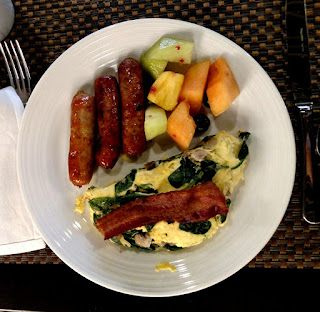
Breakfast, first course...

I believe there is a possibility that I used a second plate to get the potatoes and some more fruit. There was probably something else on the plate, too, but I can't remember. Maybe it was bacon.

Then I was forced to eat dessert...
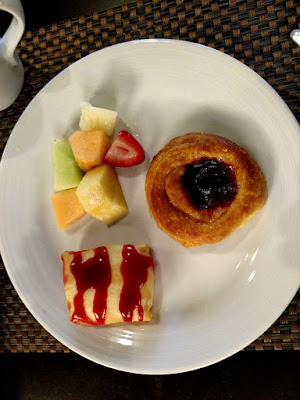
Dessert at breakfast

Yes, forced, I tell you! With more coffee, of course.

Once this celebration of gluttony concluded, I waddled out into the vendor's area to see what was for sale. Here's an example:

Lady Heather Fashions at Shore Leave
Lady Heathers Fashions at Shore Leave

This is Lady Heathers Fashions, with all sorts of stuff for cosplay. They also do custom leatherwork.

Around this time, I got a John Barrowman autograph for my brother.

At noon, I participated in the "Details of Publishing: The Good, the Bad, the Indies" workshop. The point of this was to give ideas on how to get published, with the upsides and downsides to each method. The panelists included Donna Frelick, Stephen Kozeniewski, and Marco Palmieri of TOR Books. Here's a few pointers that came out of this:

  1. Try to get reviews for your book to increase sales
  2. A Bookbub ad will get you sales, but they don't take everything
  3. Get a good cover. Look at covers you like and find out who made them. Don't be afraid to redo the cover if it doesn't work.
  4. Try small presses if the big ones aren't buying, and don't be afraid to try both
  5. Get an editor, and at least 3-4 beta readers
  6. Try sending stories to contests, if unpublished
  7. Build a query synopsis - 1 to 2 sentences with plot and ending. You can check Queryshark for help. And query only one book at a time, don't bombard them with a whole series even if you have that in mind, No more than about 200-250 words.
  8. Check out W. B. Thomas' Guide to Query Letters.

Marco Palmieri of TOR books made these points:

  1. Do your research
  2. Brevity is your friend (1 page query - no more)
  3. Check spelling
  4. Check out the Manuscript Wishlist (#MSWL)
  5. Write an elevator pitch

Other places to check for help in getting published:

  1. Chuck Wendig's Terrible Minds blog
  2. SFWA now accepts indie works (within parameters) for membership

I got out in time to see the last part of John Barrowman's Saturday talk. This is John clowning around on stage with a boy from the audience.

John Barrowman at Shoreleave 2015

After that, I caught the last part of Roger Cross speaking. I took several picture of him, but not one came out sharp.

BTW, there isn't any "travel time" built into the schedule, so just as one event ends the next is starting. That's a bit irritating as the events aren't right next to each other, and with all of the people crammed into the halls it takes time to get from one area to another.

At 3:00 PM, I attended the Writer Beware! workshop hosted by Richard White, Kathleen David, Glenn Hauman. This discussed the problems of writers being taken advantage of and is based on the website of the same name. Points I got out of this panel include:

  1. The complaint database at Writer Beware is confidential.
  2. An agent requires no certification. If an agent says they are certified, distrust them.
  3. Some valid agents will charge a fee (usually they will read the entire manuscript if they do).
  4. The biggest problem is amateur agents.
  5. The best situation is to find an agent moving away from an established company.
  6. Use AgentQuery to check for agents - who, what agency, sales.
  7. Use AbsoluteWrite - has index (blue=active agent, green=not active)
  8. Smaller presses should specialize - they shouldn't try to cover every genre.

After the workshop, I made my way into the main auditorium (the Hunt Room and the Valley Room joined together) to see the folks from Defiance (Jesse Rath, Jaime Murray, and Tony Curran).

Image of Jesse Rath, Jaime Murray, and Tony Curran from Defiance
Jesse Rath, Jaime Murray, and Tony Curran from Defiance

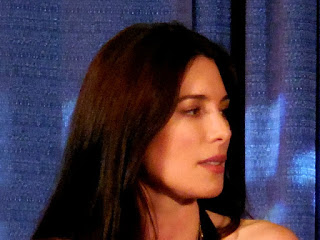
Here are close-up pics (about the best I could do without a tripod).


Jesse Rath at Shore Leave 2015

Jaime Murray at Shore Leave 2015

Tony Curran at Shore Leave 2015

Somewhere in here, I got to talk to and shake hands with David Nykl.

After that, I got into the autograph line with my group. I got an autograph from Tony Curran on a picture from the Dr. Who series where he played Vincent Van Gogh.

Then it was time for dinner. Think of dinner as breakfast except there was roast beef, fish stuffed with crab meat, and delights of that sort. And, of course, dessert! I've become quite good at waddling.

Once we attended to some personal business, we stopped by the dance area to meet friends. BTW, they were playing ABBA when we arrived, then went straight to some sort of rap music. Ecclectic tastes, here...


With the day coming to an end, we relaxed with an adult beverage (only one), then went back to our rooms and turned in.

P.S. There's more to come. I'll try to get it posted when I can.


A note about the Farpoint convention coming up in 2016:

Farpoint is trying to raise money to enable them to bring more actors and actresses from popular shows to their convention. This can be expensive. If you are interested, please listen to the message from Tim Russ (Star Trek Voyager) below, then check out their kickstarter page for more info.


Click HERE to go to the Farpoint Kickstarter.


Looking for a summer beach read? Here's a new romance/suspense novella from Terri Deno (Kindle format):


© 2012-2015 K. R. Smith All rights reserved

Friday, August 8, 2014

Shore Leave 2014 - Writing Workshop No. 2


This is my sixth post covering events at Shore Leave 2014, a convention of artists, performers, writers, scientists, and fans of science fiction and fantasy in general that took place from August 1 through August 3, 2014 in Hunt Valley, Maryland.


The second writing workshop I attended was titled Short Story vs Novelization. This took place on Sunday evening. This was a smaller group, but it was interesting and there were good questions from the attendees. These are some of the points that were covered:

  1. Get some your work (either short stories or longer pieces) published traditionally before self-publishing. They said, "If nobody else wants your stories, why would I, as a reader, want to buy your work?" This "traditional" path can be anthologies, web, micro-publishers, or a regular publishing house. This gives you some credibility before going out on your own. They also warned us not to publish our own anthologies unless you have already built up a readership.
  2. You will get rejected a lot. Keep trying. Eventually, you will succeed.
  3. Try to give them something different. Don't write another zombie story unless you have a unique twist that makes your story stand out from the rest of the pack.
  4. Writing short stories can help you develop pacing. And while some novels are really just a bunch of short stories strung together, there are differences. With short stories, you must use your words carefully. With a novel, you have a bit more leeway to provide background and other details that might be distracting in a short story.
  5. Join a local writing or critique group, if one is available.
  6. Don't let family be your beta readers. They will either be brutal without providing real guidance because they are family or they will tell you how wonderful the story is because they are family. Neither is helpful.
  7. Again, you will get rejected. Keep trying. You will succeed.
  8. When you get rejected, put that story away for a while (six months to a year) before resubmitting. If an anthology called for stories about dinosaurs with machine guns and yours is rejected, a lot of others were rejected, too. Right after the anthology is closed, other publishers will be inundated with stories about dinosaurs with machine guns (yes, this was the example they used) from all those who were rejected. Wait for the smoke to clear (no pun intended) before submitting it again.

There was some disagreement with the old idea of starting on short stories and progressing to novels. Some authors thought that if you do novels best, start there. If you're better at short stories, do that. Other believed that doing short stories first built a foundation of skills for creating longer works. They did seem to agree that novelettes or novella-length stories are making a bit of a comeback.

There were some other writing workshops that looked interesting, but my schedule didn't allow me to attend. Maybe next time! If a convention like this comes by your area, check it out. There are many interesting ideas discussed and many writing contacts to be made.


© 2012-2014 K. R. Smith All rights reserved